
AI
Prompt Engineering for Beginners: How to Write Better AI Prompts
Most disappointing AI output is a prompting problem, not a model problem. Here are the practical patterns that make results consistent enough to rely on.
Most disappointing AI output is a prompting problem, not a model problem. Here are the practical patterns that make results consistent enough to rely on.

From generating photorealistic 1080p cinematic scenes to simulating complex environmental physics, OpenAI Sora has officially opened its commercial API and web interface for global creators.

SAN FRANCISCO — Advances in 4-bit GGUF quantization and unified Apple Silicon memory have made it remarkably easy to run local LLMs in 2026, giving developers zero-latency, 100% private coding and reasoning assistants without monthly API bills.

LOS ANGELES — The best AI video generators of 2026 have crossed the threshold from silent, morphing 4-second clips into coherent 4K multi-shot scenes complete with synchronized dialogue, Foley sound effects and director-grade camera control.

SAN FRANCISCO — Choosing the right AI coding tools in 2026 requires looking beyond simple autocomplete. We tested Google Antigravity, Claude Code, OpenAI Codex, Cursor AI and GitHub Copilot head-to-head across real-world full-stack engineering benchmarks.

SAN FRANCISCO — Cursor AI remains one of the most popular AI-native code editors in 2026, blending the familiarity of VS Code with blazingly fast next-edit Tab predictions, multi-file Composer agents and instant frontier model switching.

SAN FRANCISCO — OpenAI Codex has evolved in 2026 into a full-fledged autonomous cloud software engineering agent capable of cloning repositories into isolated micro-VMs, running test suites and submitting ready-to-merge pull requests.

SAN FRANCISCO — Anthropic’s Claude Code has become a staple in the terminal workflows of senior software engineers, combining deep extended-thinking reasoning with Unix-friendly command execution and low-hallucination code generation.

SAN FRANCISCO — Google Antigravity has redefined software engineering in 2026 by shifting developers from line-by-line code completion to an agent-first workspace powered by Google DeepMind’s Gemini reasoning models.
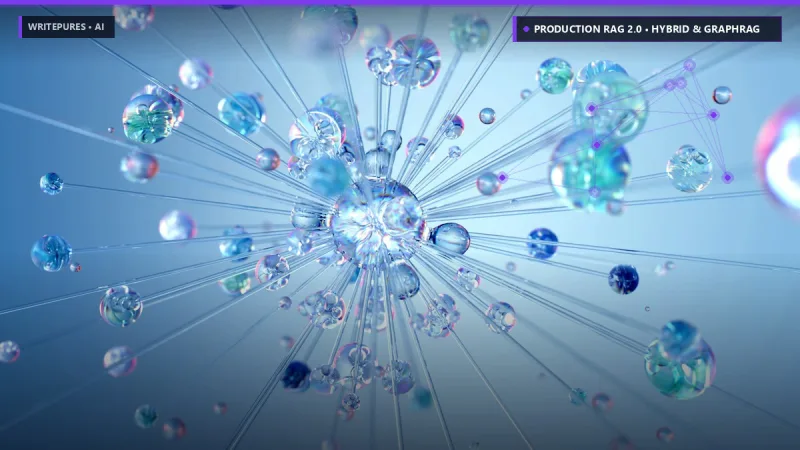
A practical engineering guide to building production-grade Retrieval-Augmented Generation (RAG 2.0) pipelines in 2026 using Contextual Retrieval, Hybrid BM25 + Dense Vector Search, Cross-Encoder Reranking, and GraphRAG.
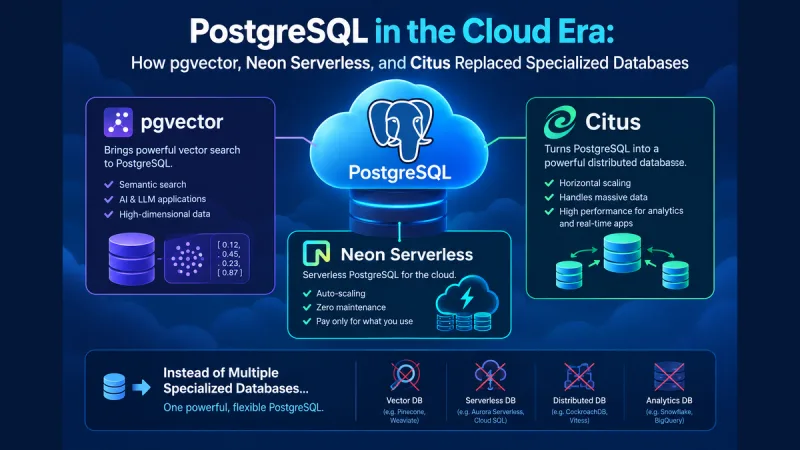
For years, teams ran five separate databases for SQL, NoSQL, search, caching, and AI vectors. Here is how modern PostgreSQL extensions and serverless storage architectures made "Just Use Postgres" the dominant cloud pattern of 2026.
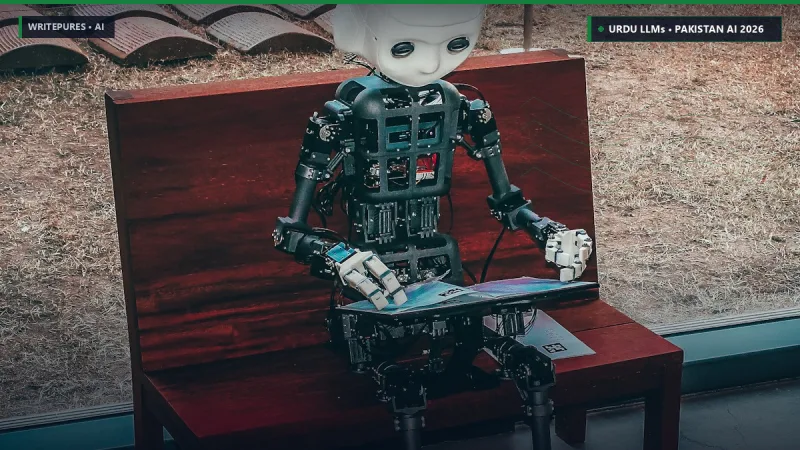
While global AI models excelled primarily in English, a new wave of Pakistani researchers and startups are training parameter-efficient Urdu and regional LLMs to revolutionize agriculture, healthcare, and citizen services.