
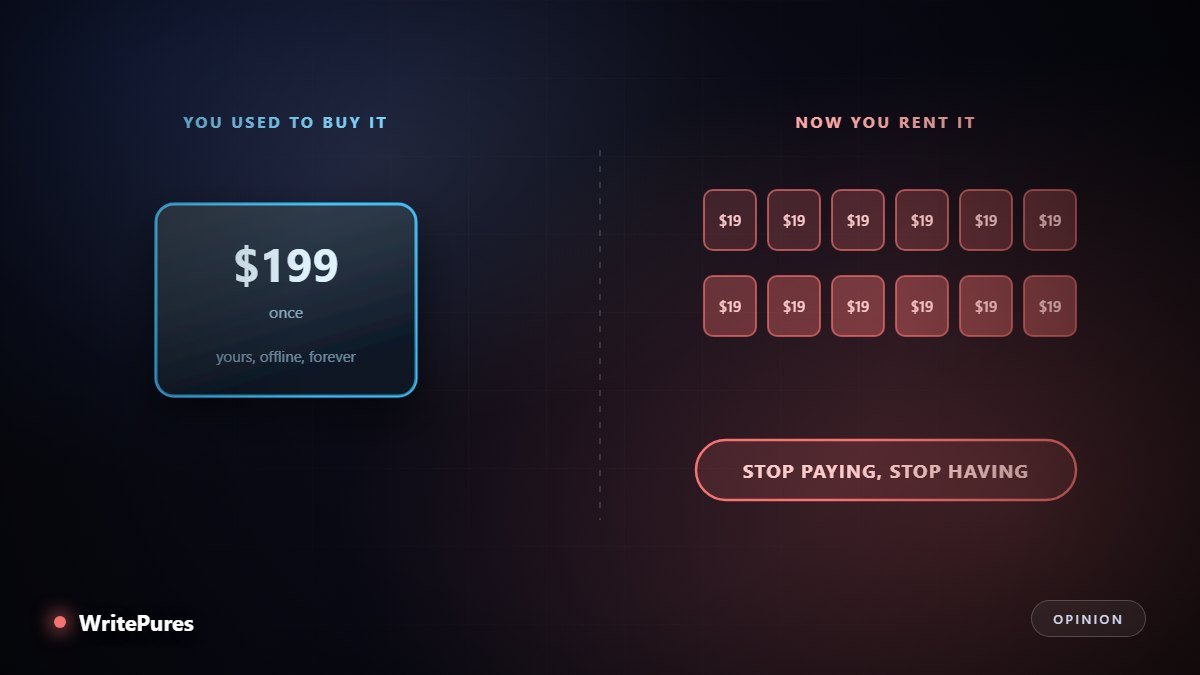
Somewhere in the last fifteen years, buying things quietly became renting them. Not through any single decision, and rarely with much objection — each individual switch looked reasonable at the time. The cumulative result is a different relationship with almost everything we use.
Where It Is Genuinely Better
An honest argument has to start here, because the subscription model did not win by accident.
- Software that needs continuous work. Security patches, compatibility with new devices, changing regulations. Someone has to pay for that, and the old model — buy version 9, then buy version 10 two years later — was worse for most people.
- Lower cost to start. Tools that once required a large upfront purchase are now reachable by a freelancer or a small firm. That is a genuine democratisation.
- Things with real running costs. Anything that stores your data or does work on a server costs money every month it exists. Charging monthly is the honest shape for that.
- No forced upgrades. Improvements arrive continuously rather than as a paid jump you have to time.
So the objection is not to recurring payment. It is to recurring payment attached to things that do not require it — and to the disappearance of any alternative.
What It Actually Costs
Control, which is the real one
An owned copy survives the company. It keeps working if prices rise, if terms change, if a feature you depend on is removed, if the business is sold or shuts down. A subscription stops at the moment any of those happen. You are buying permission, and permission is revocable on terms you did not negotiate.
The arithmetic, which is designed to be invisible
Monthly pricing deliberately obscures annual cost. Nineteen a month does not feel like two hundred and twenty-eight a year, and six subscriptions at that level do not feel like a significant annual expense until you add them up. Almost nobody does, which is the point.
Features in hardware you already own
This is where the model stops being defensible. When a capability is physically present in a device you bought, and switching it on requires a monthly payment, nothing ongoing is being supplied. The manufacturing logic is real — one product line is cheaper than five — but the customer is paying rent on their own property.
Things you cannot keep
Media that disappears from a catalogue, purchased content removed from a library, documents in a format that only opens in software you no longer pay for. "Buy" on many platforms means a licence that can end.
Why It Kept Spreading
Because the incentives are overwhelming on the seller's side, not because anyone conspired.
- Predictable revenue is valued far more highly than one-off sales — recurring businesses are worth multiples more, so every company is pushed toward it.
- Cancellation friction is profitable. Subscriptions that are easy to start and awkward to stop earn money from inattention, and that revenue is forecastable.
- Price rises face little resistance once you have organised your work or your data around something.
- Lock-in compounds. The more of your material lives inside a service, the less realistic leaving becomes.
Where to Push Back
- Price everything annually. Multiply by twelve before deciding. It is a different conversation.
- Run a yearly audit. List every recurring charge, cancel anything unused for two months. Most people find something they had forgotten entirely.
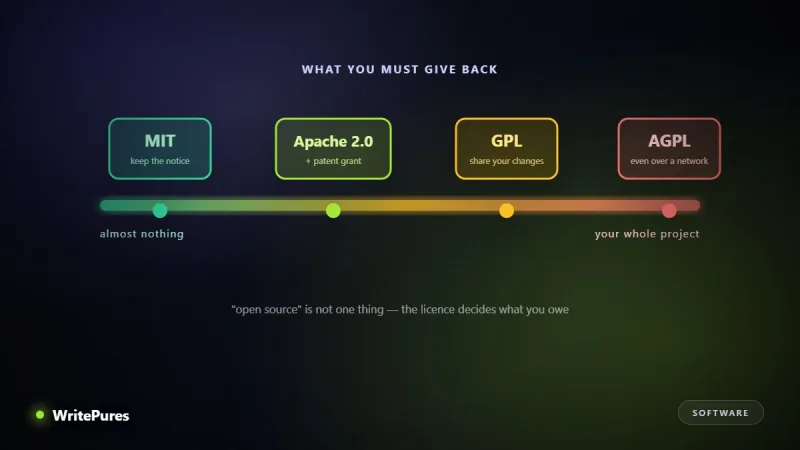
- Prefer owned or open alternatives where one is credible — and accept it will sometimes be less polished. Our guide to open source licences covers what you actually owe in return for using them.
- Keep exports. If losing access to something would hurt, hold a local copy in a format that opens elsewhere.
- Treat exit as a buying criterion. Before subscribing, check you can get your data out. If you cannot, the price is higher than advertised.
- Note the renewal date the day you sign up.
For businesses, the same logic applies with more at stake — our guide to build versus buy covers how to weigh a permanent dependency against the cost of owning something.
Key Takeaways
- Recurring payment is honest for things with genuine running costs — that is not the complaint.
- The real cost is control: a subscription ends when the seller decides, an owned copy does not.
- Monthly pricing is structured so the annual total is never visible.
- Charging to unlock hardware you already own is rent on your own property.
- Audit annually, keep exports, and treat the exit path as part of the price.
Written by the WritePures newsroom. Spotted something that needs updating? Tell our editors.


0 Comments
Join the conversation
Replying toNo comments yet. Be the first to share your thoughts.