

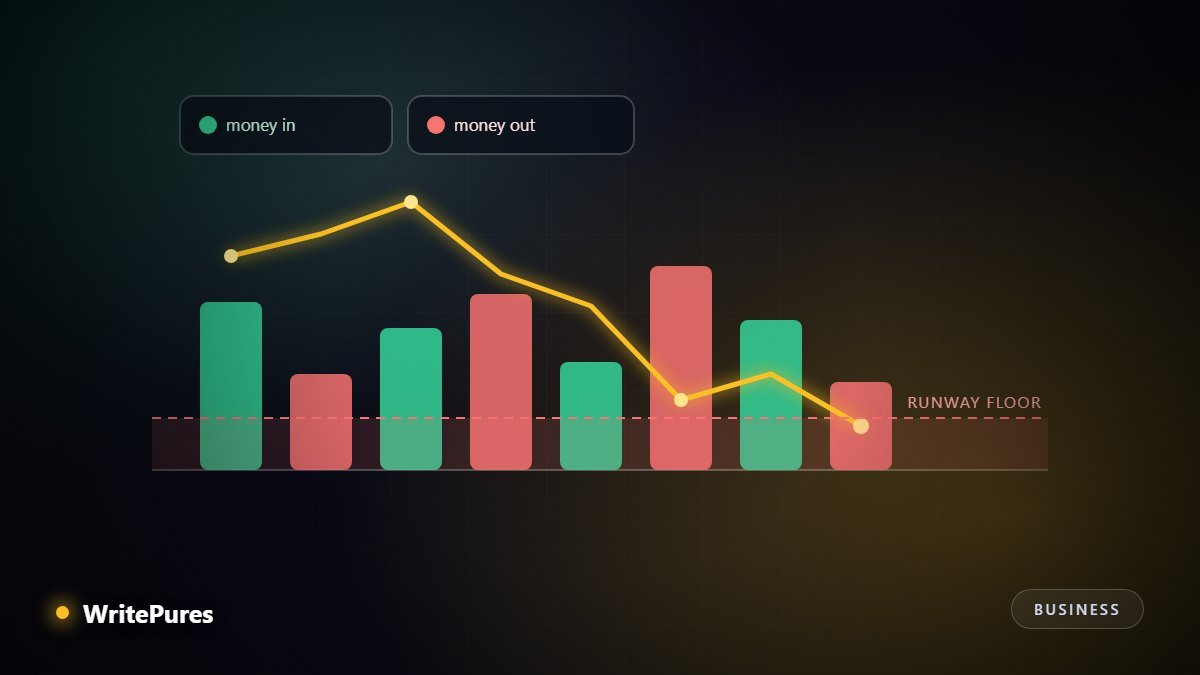
More small businesses are closed by running out of cash than by being unprofitable. The two are not the same thing, and the gap between them — invoiced but unpaid, sold but not yet collected — is where otherwise healthy businesses quietly fail.
Profit Is an Opinion, Cash Is a Fact
Profit is calculated on when things were earned. Cash is about when money actually moved. Consider a simple case:
- You win an order in January worth a healthy margin and invoice immediately. On paper, January is profitable.
- You buy materials in January and pay for them in February.
- Staff are paid in January, February and March.
- The customer pays in April.
Every month looks profitable. Yet from February to April you are paying out with nothing coming in. That gap is where businesses die, and it is invisible on a profit and loss statement.
Growth makes it worse. Doubling sales means doubling the stock you buy and the invoices you wait on — the cash goes out first and comes back later, so the faster you grow, the bigger the hole before it fills.
Building a Thirteen-Week Forecast
Thirteen weeks is a quarter expressed weekly. Weekly matters: a month that balances overall can still contain a fortnight where you cannot pay wages.
One column per week, and four blocks of rows:
- Opening balance — what is genuinely in the bank on Monday.
- Money in — customer payments by expected date, not invoice date. If a customer has always paid in 45 days, forecast 45 days however the invoice is worded. Add any loans or other income on separate lines.
- Money out — wages, rent, suppliers, tax, loan repayments, utilities, subscriptions. Fixed costs first since you know them; variable costs by best estimate.
- Closing balance — opening plus in, minus out. It becomes next week's opening.
Then add the line that makes it useful: a minimum balance you must never go below — enough to cover payroll and rent. Any week where the closing balance approaches it is a warning, and you now have weeks of notice instead of days.
Forecast from behaviour, not from terms
The single most common error is entering what customers have agreed to rather than what they do. Look at the last six months and use each customer's actual average payment time. The forecast exists to tell you the truth, and optimism is the thing that makes it useless.
Fixing a Shortfall, in Order
When the forecast shows trouble, work through these in sequence. The early ones are cheap and fast; the later ones cost money.
- Collect what you are owed. This money is already yours. Chase largest first, call rather than email, and ask directly when payment will be made.
- Invoice faster. Many businesses invoice at month end out of habit, adding weeks of delay for no reason. Invoice on delivery.
- Make paying easy. Clear terms, correct details, a payment link. A surprising share of late payment is friction, not refusal.
- Ask suppliers for longer terms before you are late, not after. Most would rather extend than lose a reliable customer.
- Delay what is deferrable — non-essential purchases, discretionary projects.
- Take deposits on new work. The cleanest structural fix, and it changes every future month.
- Arrange finance early. Credit costs far less when arranged six weeks ahead than in the week you need it, and lenders respond better to a forecast than to a crisis.
Deposits change the shape of the business
Of everything above, taking deposits has the largest lasting effect. Moving from payment-on-completion to a third upfront converts a permanent cash gap into a permanent cash buffer. It is also the change most owners assume customers will refuse — and most customers accept it as normal.
Keeping It Honest
- Update it weekly, on the same day. A stale forecast is worse than none, because it is believed.
- Compare forecast to actual. Where you were wrong tells you which assumptions to fix.
- Keep tax separate. Money owed to the revenue authority is not yours to spend; a separate account removes the temptation. Our guide to tax rates covers what to set aside.
- Model one bad case. What if your largest customer pays sixty days late? If that breaks you, concentration is your real risk, not cash flow.
Key Takeaways
- Profit is earned; cash is received. The gap between them closes businesses.
- Growth consumes cash before it produces it.
- Forecast weekly for thirteen weeks, using how customers actually pay.
- Set a minimum balance line so a shortfall arrives as warning, not crisis.
- Collect first, borrow last — and take deposits, which fixes it permanently.
Written by the WritePures newsroom. Spotted something that needs updating? Tell our editors.



0 Comments
Join the conversation
Replying toNo comments yet. Be the first to share your thoughts.