

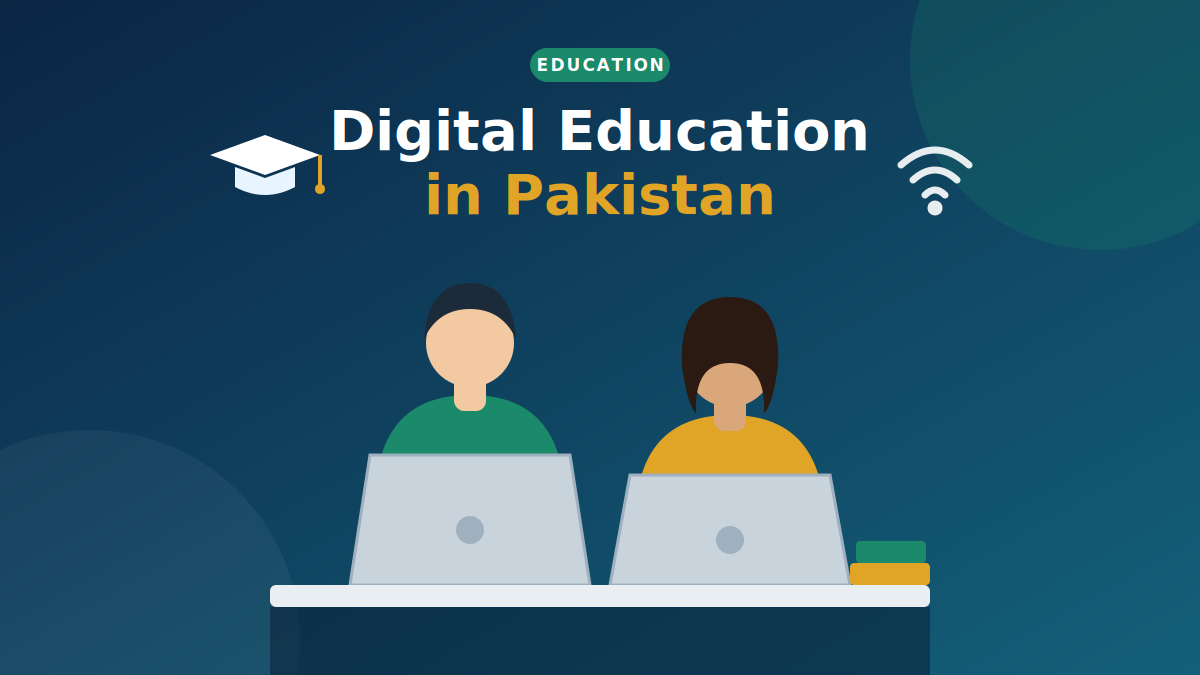
Digital education in Pakistan is going through a quiet but important shift.Classrooms that once depended only on textbooks and blackboards now use videos, online lectures and learning apps. For students and parents, the question is no longer whether digital education will matter, but how to benefit from it.
Why digital education is growing
Smartphones and cheaper internet packages have put learning material in the hands of millions of students. Universities now run online portals for lectures, assignments and results, while free and paid courses let learners pick up skills outside the classroom. The Higher Education Commission also continues to promote digital learning initiatives for universities.
Skills employers want
Employers increasingly look for practical skills alongside a degree. Data analysis, graphic design, programming, digital marketing and SEO are among the most sought-after areas. Many students now build portfolios and take freelance work while still studying, which gives them real experience before graduation.
The challenges that remain
Digital education in Pakistan is not equally available to everyone. Students in remote areas often face weak internet, power cuts and a lack of devices. Many teachers also need better training to use technology effectively, and online courses can suffer from low completion rates when students lack guidance.
The gap between cities and villages
Urban students usually have easier access to devices and reliable connections. Closing this gap needs investment in infrastructure, community learning centres and low-cost devices, so that quality education does not depend on where a child is born.
What students can do now
Students do not need to wait for the system to change. A few practical steps can make a big difference:
- Choose one in-demand skill and practise it regularly.
- Build small real projects, such as a dashboard, website or report.
- Use free resources and official university portals wisely.
- Create a profile on freelancing platforms to gain early experience.
For more on this topic, read our latest education coverage.
The way forward
Technology will not replace teachers, but it can make good teaching reach more people. If schools, universities and the government work together on access, training and quality,digital education in Pakistan can open real opportunities for the country's young population.







0 Comments
Join the conversation
Replying toNo comments yet. Be the first to share your thoughts.