

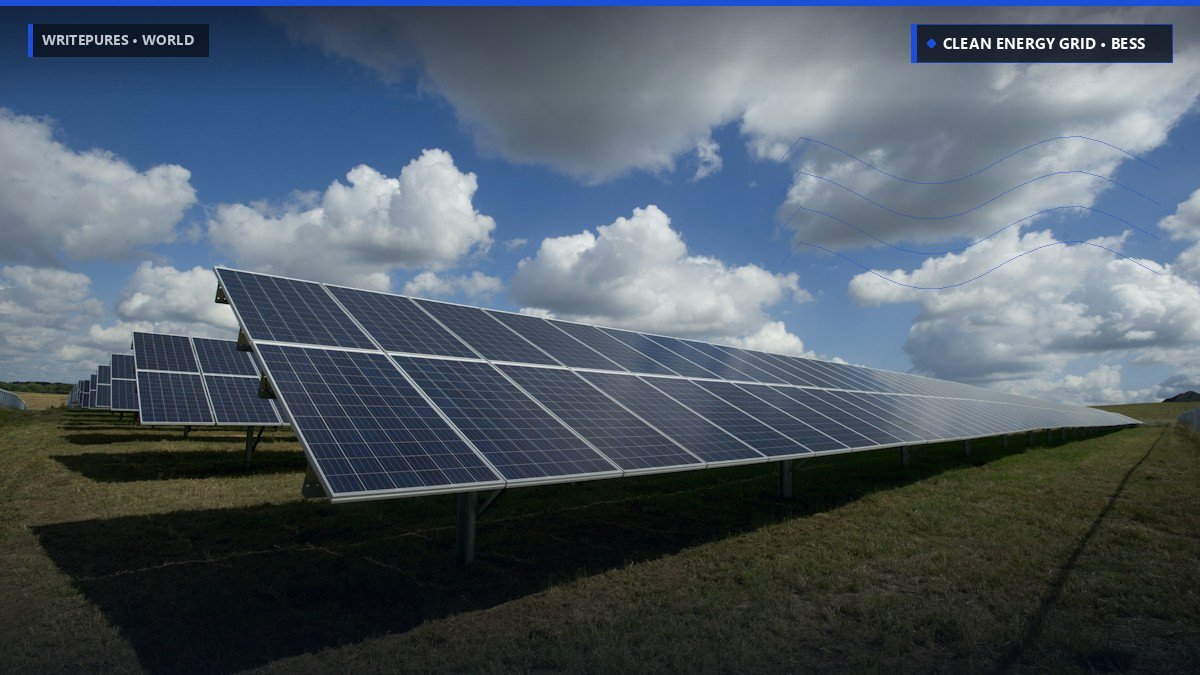
For more than a century, global geopolitical power was dictated by oil fields, gas pipelines, and maritime shipping choke points like the Strait of Hormuz and the Malacca Strait. Nations without domestic fossil fuel reserves spent massive percentages of their GDP importing oil and gas, leaving their economies vulnerable to inflation and currency depreciation whenever conflicts erupted. In 2026, the exponential adoption of utility-scale battery storage (BESS) and record solar capacity is fundamentally reshaping global energy independence.
Solar: The Cheapest Electricity in History
According to the International Energy Agency (IEA), solar photovoltaic power has officially become the cheapest form of electricity in recorded history. Technological advancements in perovskite tandem solar cells have boosted commercial panel efficiency past 27%, while automated gigafactories have driven capital costs down to unprecedented lows.
Solving the Intermittency Problem: The BESS Revolution
The perennial critique of renewable energy was the intermittency problem: "What happens when the sun sets and the wind stops blowing?"
In 2026, the answer is battery energy storage. Utility-scale batteries deployed alongside solar farms absorb excess electricity during midday peaks and discharge it smoothly into the electrical grid during the evening peak demand window (5 PM to 10 PM). In power grids across California, Australia, China, and the Mediterranean, battery storage now frequently provides more peak power than traditional natural gas peaker plants—at a fraction of the operating cost.
The Rise of Sodium-Ion Battery Chemistry
A crucial technological breakthrough enabling this transition has been the commercialization of Sodium-ion batteries for stationary grid storage. Unlike mobile electric vehicles that require maximum energy density per kilogram, stationary grid batteries have ample physical space. Sodium-ion chemistry utilizes abundant, inexpensive table salt precursors and requires zero expensive lithium, cobalt, or nickel, insulating supply chains from mineral shortages.
The New Geopolitical Reality
Energy is shifting from an extractive commodity that must be continuously dug up and shipped, to a manufactured technology whose price declines steadily with manufacturing scale. For developing countries, domestic clean power is the ultimate engine of economic self-reliance.





0 Comments
Join the conversation
Replying toNo comments yet. Be the first to share your thoughts.