

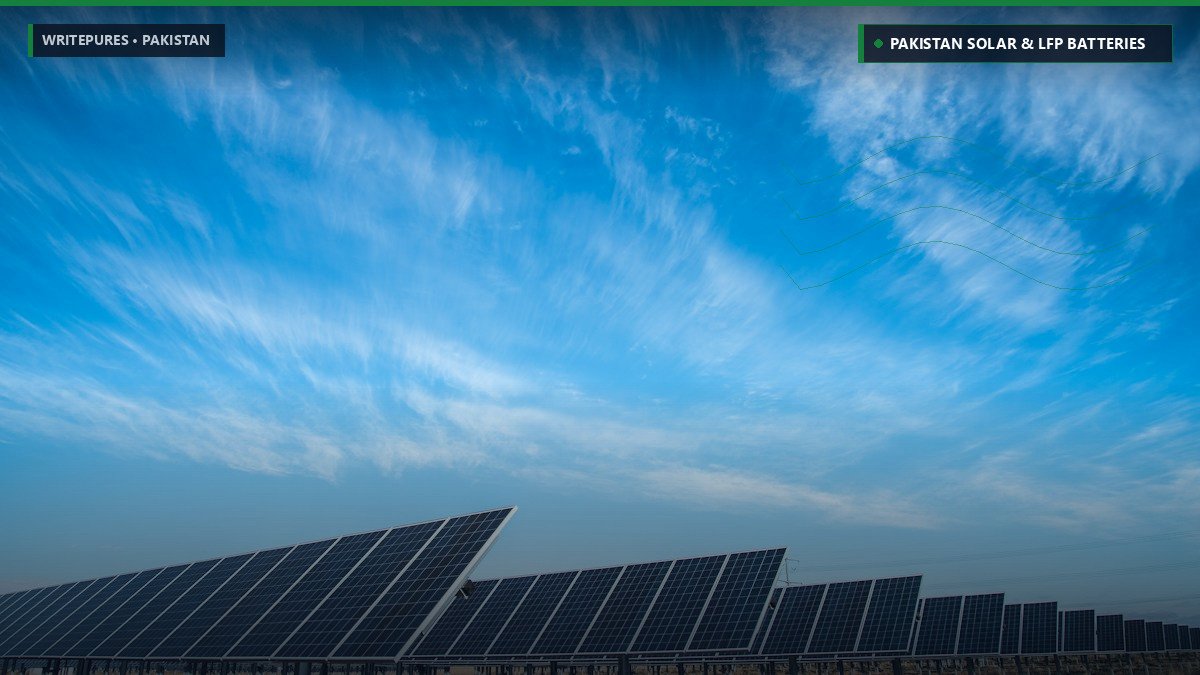
Over the past thirty-six months, Pakistan has executed one of the fastest grass-roots clean energy transitions on planet Earth. Driven by high grid electricity tariffs and plunging global photovoltaic module prices, rooftops from Karachi and Hyderabad to Lahore, Faisalabad, Rawalpindi, and Peshawar are now blanketed in high-efficiency N-Type TOPCon and bifacial solar panels. In 2026, Phase Two of Pakistan's energy revolution is in full swing: the mass adoption of Lithium Iron Phosphate (LFP) battery storage.
From Grid Export to Smart Self-Consumption
In the early wave of Pakistani solar adoption (2022–2024), most urban consumers installed on-grid net-metering systems without batteries, relying on the local distribution company (DISCO) to act as a virtual battery. However, evolving net-billing regulations and lower daytime export buyback rates in 2026 have changed the financial math.
Instead of exporting cheap kilowatt-hours to the grid at noon and buying back expensive peak-hour electricity at 8:00 PM, Pakistani homeowners and commercial offices are installing IP65 smart hybrid inverters paired with wall-mounted 5kWh to 20kWh LFP battery modules:
- Peak Tariff Shaving: Intelligent inverter firmware charges the lithium bank to 100% by 2:00 PM and automatically powers air conditioners, refrigerators, and office servers from stored battery energy throughout the evening peak window.
- 10-Year Lifespan: Unlike old tubular lead-acid batteries that boiled dry every two summers, Grade-A LFP cells deliver over 6,000 cycles with built-in Battery Management Systems (BMS) monitored via smartphone apps.
- Industrial Competitiveness: Textile mills in Faisalabad and surgical exporters in Sialkot are deploying megawatt-scale container battery systems alongside captive solar arrays, stabilizing factory power costs at under 9 cents per kWh.
Safety & Installation Standards
Engineers strongly advise consumers to insist on Tier-1 UL-certified LFP battery packs with active aerosol fire suppression, proper DC SPD surge arrestors, and dedicated earthing pits to withstand Pakistan's intense summer ambient temperatures.








0 Comments
Join the conversation
Replying toNo comments yet. Be the first to share your thoughts.