

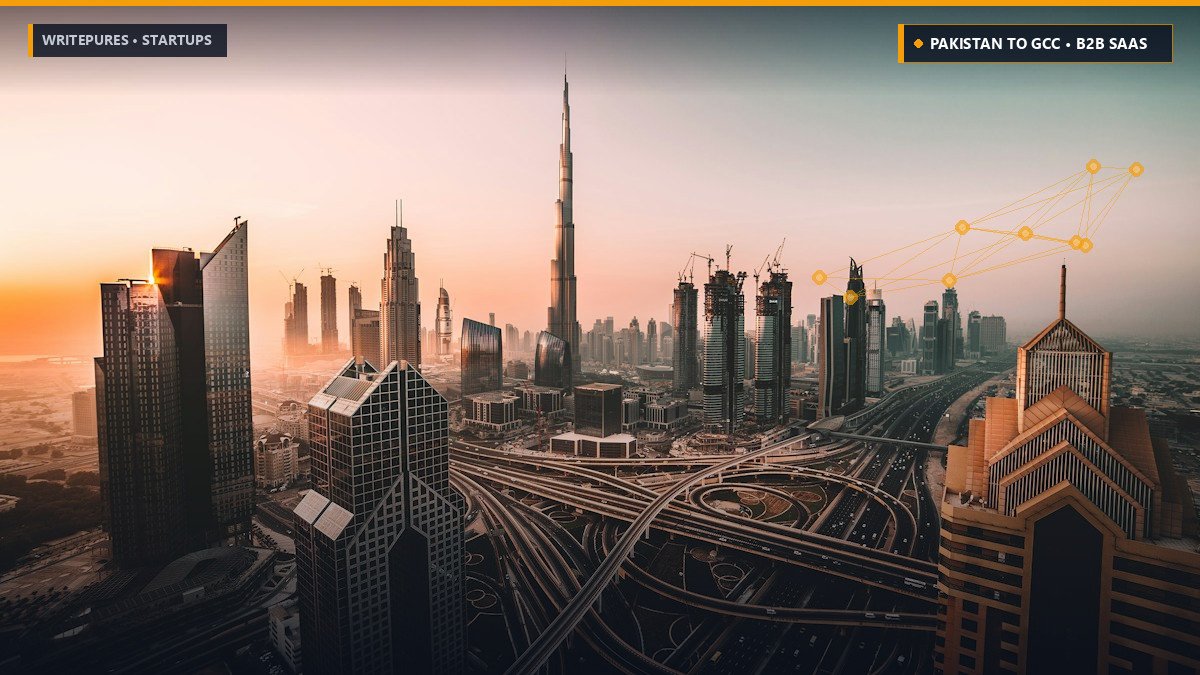
After the global venture capital correction of 2022–2024, Pakistan's startup ecosystem underwent a healthy, decisive pivot. Founders realized that burning millions of dollars subsidizing hyper-local consumer deliveries in an inflation-sensitive market was unsustainable. In 2026, the dominant, highly profitable playbook for Pakistani entrepreneurs is clear: build world-class B2B SaaS and enterprise AI in Pakistan, and sell into the booming Gulf Cooperation Council (GCC) market.
The Riyadh–Lahore–Karachi Tech Corridor
Driven by Saudi Arabia's Vision 2030 and the UAE's digital economy strategy, public and private enterprises across the Middle East are modernizing ERP systems, ZATCA e-invoicing, hospital management, construction telemetry, and Islamic fintech at breakneck speed. Yet Gulf enterprises face an acute shortage of senior software architects.
Pakistani founders have bridged this gap with a dual-corridor structure:
- Front-Office Presence in Riyadh & Dubai: Founders spend half their quarter on the ground in KSA and the UAE, navigating Arabic localization, Saudi PDPL data residency compliance, and enterprise relationship building.
- Deep Engineering R&D in Pakistan: Product architecture, quality assurance, DevOps, and AI model training are executed by dedicated 30-to-100-person engineering hubs in Lahore, Karachi, Islamabad, and Peshawar.
Verticals Where Pakistani Startups Are Leading
Rather than competing head-on with horizontal giants like Salesforce, Pakistani SaaS teams are dominating specialized verticals:
- Healthcare & Pharmacy ERPs: Cloud-native clinic, laboratory, and pharmacy point-of-sale platforms compliant with Gulf health insurance claim exchanges (NPHIES).
- Fleet & Cold-Chain Logistics: IoT-connected route optimization and fuel-theft prevention platforms managing thousands of commercial trucks across Dammam, Jeddah, and Jebel Ali.
- PropTech & Facility Management: Automated tenant billing, predictive HVAC maintenance, and smart access control for mega-developments.
Hard-Currency Unit Economics
By earning Annual Recurring Revenue (ARR) in Saudi Riyals (SAR) and UAE Dirhams (AED) while maintaining operating expenses in Pakistani Rupees (PKR), cross-border Pakistani startups achieve gross margins exceeding 80% and reach profitability within 12 months of seed funding.








0 Comments
Join the conversation
Replying toNo comments yet. Be the first to share your thoughts.