Serverless Containers vs Kubernetes: Cloud Architecture 2026
The architectural dilemma of Serverless Containers vs Kubernetes defines enterprise cloud computing budgets in 2026, balancing developer velocity against infrastructure control.

When safeguarding enterprise applications, evaluating NGINX vs Apache Security reveals crucial architectural trade-offs in request handling and DDoS resilience.
A production-grade Laravel deployment guide covering zero-downtime atomic releases, NGINX ingress tuning, Supervisor queue workers, and caching.
The release of Kubernetes v1.33 marks a major milestone for AI/ML infrastructure, bringing production-grade GPU scheduling and hardened cluster controls.
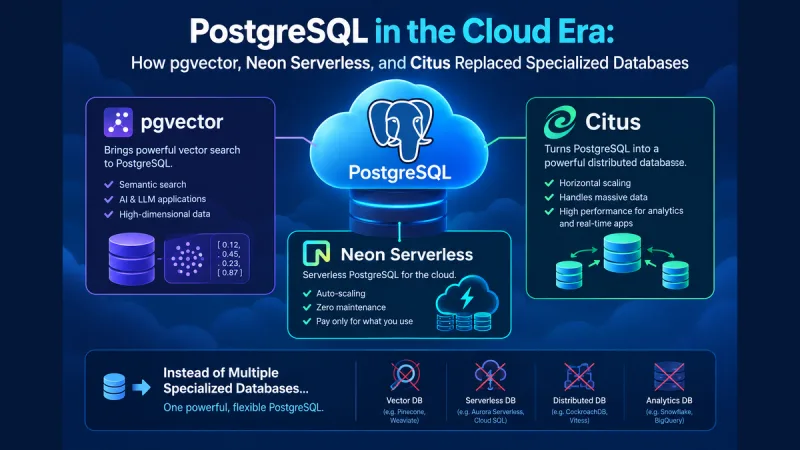
For years, teams ran five separate databases for SQL, NoSQL, search, caching, and AI vectors. Here is how modern PostgreSQL extensions and serverless storage architectures made "Just Use Postgres" the dominant cloud pattern of 2026.
The "all-in on hyperscale public cloud" dogma is over. In 2026, smart CTOs combine public cloud elasticity for burst traffic with bare-metal Kubernetes and sovereign clouds to cut infrastructure spend by 50%.
Traditional serverless was plagued by cold starts and relational database connection limits. Serverless 2.0 brings distributed edge runtimes and stateful replication right to the user’s doorstep.