

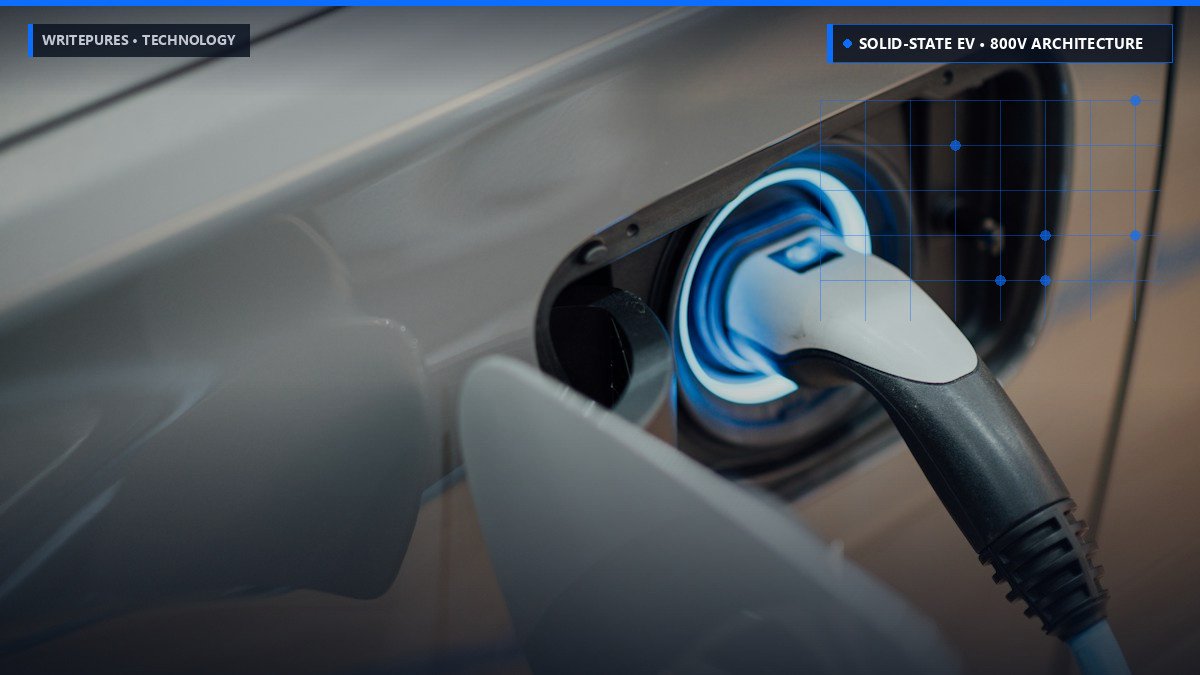
For over a decade, skeptics of electric vehicles pointed to two legitimate engineering limitations: charging took forty-five minutes compared to five minutes at a petrol pump, and liquid lithium-ion batteries lost significant range in extreme heat or freezing cold. In 2026, breakthroughs in semi-solid-state battery manufacturing and 800-volt Silicon-Carbide (SiC) powertrains have decisively solved both problems.
Inside the 5C Charging and Semi-Solid-State Leap
Traditional lithium-ion cells use a flammable liquid electrolyte that degrades if charged too rapidly, causing metallic lithium dendrites to form on the anode. New semi-solid and condensed-matter cells commercialized by leading battery makers replace volatile liquids with high-conductivity polymer-ceramic gel matrices.
- Energy Density Past 380 Wh/kg: Vehicles can now pack 110 kWh of energy into the physical footprint and weight of a previous-generation 75 kWh pack, unlocking real-world highway ranges exceeding 950 to 1,000 kilometers on a single charge.
- 10-Minute Replenishment: Combined with 800V electrical architectures that halve cable amperage and heat dissipation, 5C-rated packs charge from 10% to 80% in the time it takes to grab a cup of coffee.
- Thermal Safety: Solid-state and blade LFP chemistries pass nail-penetration and extreme 60°C ambient heat tests without thermal runaway.
Wheels on the Grid: Bidirectional V2H Power
In emerging markets and solar-rich countries alike, the most transformative EV feature of 2026 is standard bidirectional Vehicle-to-Load (V2L) and Vehicle-to-Home (V2H) capability. Even a compact electric hatchback carries a 50 kWh battery—equivalent to four expensive residential wall batteries—allowing owners to charge their car from rooftop solar during the day and power their home air conditioning at night.
Two- & Three-Wheeler Electrification
While passenger cars capture headlines, swappable LFP battery networks for electric motorcycles and commercial rickshaws across Asia are cutting urban commuter fuel expenses by 70%.








0 Comments
Join the conversation
Replying toNo comments yet. Be the first to share your thoughts.