

For years, the generative AI race was defined by brute force: trillion-parameter models, warehouse-sized GPU clusters, and astronomical electricity bills. But in 2026, a counter-revolution has taken center stage. Small Language Models (SLMs), ranging from 1.5 billion to 7 billion parameters, are proving that tailored architecture and refined training data routinely beat sheer scale for specialized tasks.
The Physics of On-Device Inference
Cloud-based models suffer from inherent bottlenecks that no amount of compute can fix: physical network latency and data transfer privacy concerns. Sending a user's voice memo, personal health record, or confidential legal document to a third-party server introduces round-trip delay and data sovereignty complications.
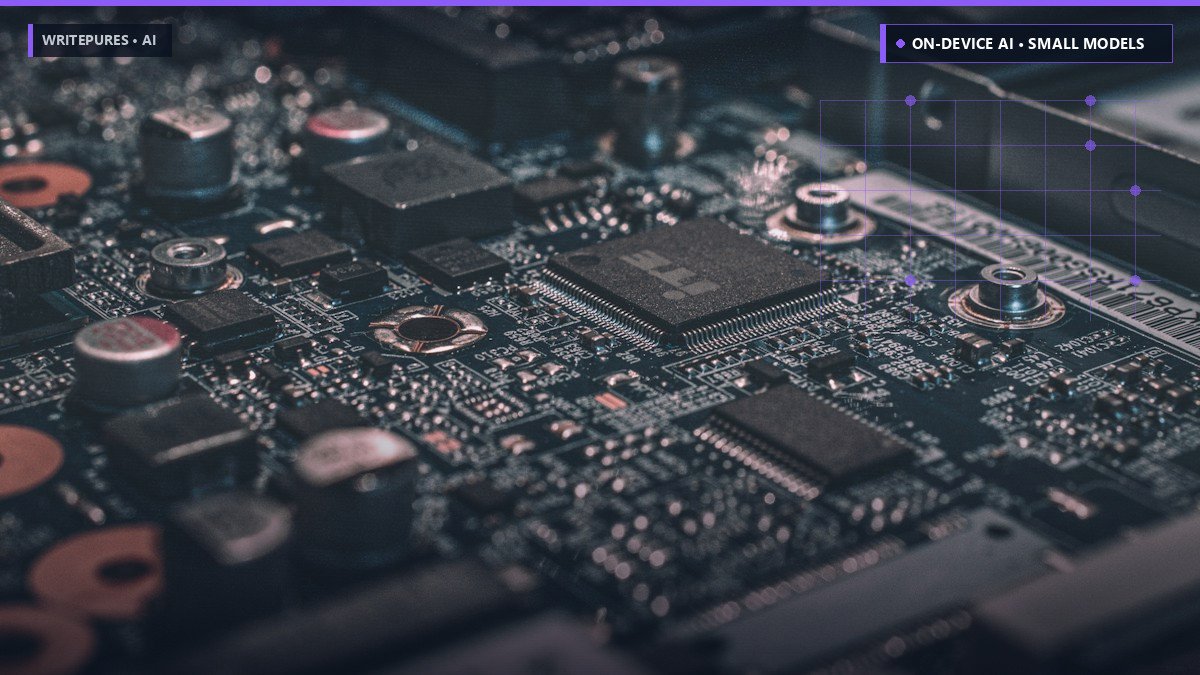
Modern silicon—from Apple's M-series chips to Qualcomm's Snapdragon X Elite and MediaTek's latest Dimensity processors—now includes dedicated Neural Processing Units (NPUs) capable of delivering over 45 TOPS (trillions of operations per second). When paired with 4-bit quantized SLMs, devices can generate 40 to 60 tokens per second completely offline, using negligible battery power.
Key Advantages of the SLM Approach
- Zero Cloud Infrastructure Costs: App developers no longer pay monthly API token bills for basic summarization, text categorization, and parsing. The client device handles the compute.
- Uncompromising Privacy: Sensitive financial records, medical transcripts, and private messages never leave the user's physical hardware.
- Deterministic Latency: Local execution is unaffected by network congestion, API rate limits, or remote server outages.
- Offline Resilience: Critical features work on airplanes, in remote field sites, and during unexpected broadband interruptions.
Architectural Reality
The enterprise stack is consolidating into a hybrid model: lightweight SLMs running locally for 90% of routine interactions, routing to frontier cloud models only when massive multi-step reasoning or vast world knowledge is required.
The Path Forward for Developers
Frameworks such as ONNX Runtime, WebGPU, and Apple MLX have made deploying SLMs cross-platform a standard practice. Developers looking to build sustainable consumer applications in 2026 are focusing on domain-specific fine-tuning and retrieval-augmented generation (RAG) at the edge, rather than relying solely on monolithic cloud APIs.








0 Comments
Join the conversation
Replying toNo comments yet. Be the first to share your thoughts.